
- Introduction
- Strategic Objectives of the Fund
- Ukraine's Critical Mineral Wealth
- Geopolitical Context and U.S. Strategy
- Ukraine's Sovereignty and Control
- Private-Sector Investment Challenges
- Infrastructure and Energy Constraints
- Geological Survey Limitations
- Alignment with EU Accession Goals
- Exclusion of Adversarial Entities
- Ratification and Legislative Process
- Security Implications and Military Aid
- Economic Impacts and Reconstruction Efforts
- Global Reactions and Diplomatic Dynamics
- Frequently Asked Questions (FAQs)
- Conclusion
Introduction
On April 30, 2025, the United States and Ukraine signed a landmark agreement establishing the U.S.-Ukraine Reconstruction Investment Fund. This initiative aims to bolster Ukraine’s post-war recovery by attracting private-sector investments, particularly in the critical minerals sector, thereby reducing global dependence on Chinese mineral production.
Strategic Objectives of the Fund
The primary goal of the U.S.-Ukraine Reconstruction Investment Fund is to facilitate Ukraine’s economic recovery through strategic investments in its rich mineral resources. By providing American companies with preferential access to Ukraine’s rare earth minerals, the fund seeks to diversify global supply chains and diminish reliance on Chinese mineral dominance.
Ukraine’s Critical Mineral Wealth
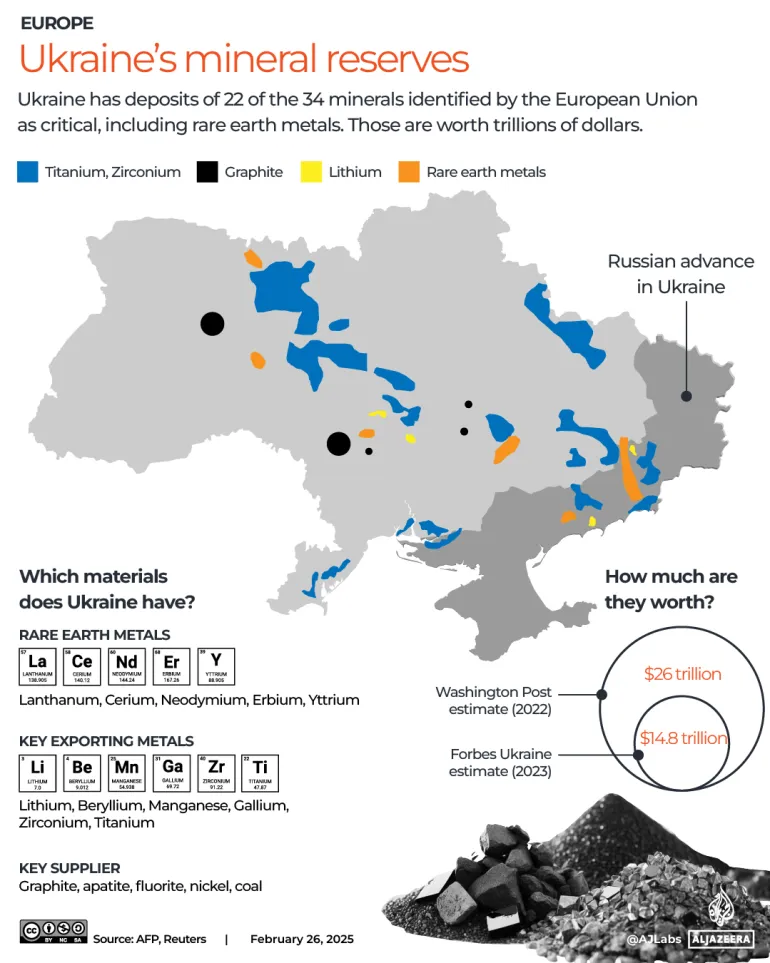
Ukraine possesses deposits of 22 out of the 34 minerals identified by the European Union as critical, including significant reserves of lithium, titanium, graphite, and rare earth elements like neodymium and erbium. These minerals are essential for modern technologies such as electronics, renewable energy systems, and defense applications.
Geopolitical Context and U.S. Strategy
The establishment of the fund aligns with the U.S.’s broader strategy to counter China’s dominance in the critical minerals market. By securing access to Ukraine’s mineral resources, the U.S. aims to strengthen its supply chains and reduce vulnerabilities associated with overreliance on Chinese exports.
Ukraine’s Sovereignty and Control
Despite the collaborative nature of the fund, Ukraine retains full control over its resource extraction decisions. The agreement ensures that all resource development projects are subject to Ukrainian laws and regulations, preserving the nation’s sovereignty over its natural assets.
Private-Sector Investment Challenges
Attracting private-sector investments remains a significant challenge due to ongoing security concerns and infrastructure deficits in Ukraine. Investors are cautious about committing capital in regions affected by conflict and lacking modern infrastructure necessary for large-scale mineral extraction and processing.
Infrastructure and Energy Constraints
Ukraine’s infrastructure has suffered extensive damage due to the war, with the country’s power capacity reduced to approximately one-third of its prewar levels. This energy shortage poses a substantial hurdle for mining operations, which are energy-intensive and require stable power supplies.
Geological Survey Limitations
A significant obstacle to resource development is the lack of modern geological surveys in Ukraine. Much of the existing data is outdated, dating back to the Soviet era, making it difficult to accurately assess the full potential of mineral deposits. Experts estimate that developing new mining projects could take up to 18 years, considering the need for comprehensive surveys and feasibility studies.
Alignment with EU Accession Goals
The fund’s objectives are compatible with Ukraine’s aspirations to join the European Union. By aligning its resource development strategies with EU standards and regulations, Ukraine aims to strengthen its candidacy for EU membership and integrate more deeply into European economic structures.
Exclusion of Adversarial Entities
The agreement includes provisions to prevent entities linked to Russia’s war efforts from benefiting from reconstruction projects. This measure ensures that the fund’s resources are directed toward Ukraine’s recovery and not exploited by adversarial actors.
Ratification and Legislative Process
The agreement requires ratification by Ukraine’s parliament, with a vote scheduled for May 8, 2025. Upon approval, the fund will become operational, marking a significant step forward in Ukraine’s reconstruction and economic revitalization efforts.
Security Implications and Military Aid
While the agreement does not include explicit security guarantees, it is expected to facilitate additional U.S. military aid to Ukraine. Following the deal’s signing, President Trump approved $50 million in military assistance, signaling continued U.S. support for Ukraine’s defense capabilities.
Economic Impacts and Reconstruction Efforts
The fund is poised to play a crucial role in Ukraine’s economic recovery by channeling investments into the mining sector and related infrastructure. Profits generated from these ventures will be reinvested into Ukraine’s economy, fostering growth and stability in the post-war period.
Global Reactions and Diplomatic Dynamics
The agreement has elicited varied responses on the international stage. While it strengthens U.S.-Ukraine relations and underscores a commitment to Ukraine’s sovereignty, it has drawn criticism from Russia, which views the deal as a threat to its influence in the region. The agreement also serves as a strategic signal to other global powers about the U.S.’s investment in Ukraine’s future.
Frequently Asked Questions (FAQs)
Q1: What is the primary objective of the U.S.-Ukraine Reconstruction Investment Fund?
A1: The fund aims to support Ukraine’s post-war recovery by attracting private-sector investments, particularly in the critical minerals sector, to reduce global dependence on Chinese mineral production.
Q2: Does Ukraine retain control over its mineral resources under the agreement?
A2: Yes, Ukraine maintains full sovereignty over its resource extraction decisions, with all projects subject to Ukrainian laws and regulations.
Q3: What challenges might investors face when engaging with the fund?
A3: Investors may encounter challenges such as security concerns due to ongoing conflicts, infrastructure deficits, and outdated geological data, which can complicate resource development efforts.
Q4: How does the agreement align with Ukraine’s EU accession goals?
A4: The fund’s objectives are compatible with EU standards and regulations, supporting Ukraine’s aspirations to join the European Union by integrating its economic strategies with those of the EU.
Q5: Are there provisions to prevent adversarial entities from benefiting from the fund?
A5: Yes, the agreement includes measures to exclude entities linked to Russia’s war efforts from participating in reconstruction projects, ensuring resources are directed toward Ukraine’s recovery.
Q6: What are the next steps for the agreement to become operational?
A6: The agreement requires ratification by Ukraine’s parliament, with a vote scheduled for May 8, 2025. Upon approval, the fund will commence operations.
Conclusion
The U.S.-Ukraine Reconstruction Investment Fund represents a strategic partnership aimed at revitalizing Ukraine’s economy and reducing global reliance on Chinese minerals. By leveraging Ukraine’s rich mineral resources and aligning with international standards, the fund seeks to foster economic growth, strengthen sovereignty, and contribute to global supply chain diversification. While challenges remain, the agreement marks a significant step toward Ukraine’s post-war recovery and integration into the global economy.