
- Historical Background of the Vietnam War
- The Fall of Saigon and the Official End of the War (1975)
- 50th Anniversary Celebrations in Ho Chi Minh City
- Emphasis on National Unity and Healing
- Economic Transformation Since the War
- Doi Moi Reforms and Global Integration
- Geopolitical Shifts and U.S.-Vietnam Relations
- Public Reactions and Historical Sensitivities
- Role of Veterans and War Survivors in Commemoration
- Cultural Reflections on the War
- Tourism and Historical Sites Related to the War
- The Role of Youth in National Memory and Future Vision
- Environmental and Demographic Challenges
- Lessons Learned and the Path Ahead
- Global Response and International Coverage
- Government’s Vision for the Next 50 Years
- ❓ Frequently Asked Questions (FAQs)
- 🏁 Conclusion: Honoring the Past, Building the Future
Historical Background of the Vietnam War
The Vietnam War, often referred to as the Second Indochina War, was a devastating conflict that defined much of the 20th century. After France’s colonial withdrawal in the 1950s, tensions escalated between the communist North and the U.S.-backed South. What followed was a prolonged war involving guerrilla tactics, aerial bombings, and chemical warfare that deeply affected both Vietnamese civilians and American soldiers.
The war extended far beyond Vietnam’s borders, influencing global geopolitics during the Cold War and prompting intense domestic unrest in the United States. Millions were killed, and entire regions of Vietnam were left devastated.
The Fall of Saigon and the Official End of the War (1975)
April 30, 1975, marked the fall of Saigon—now Ho Chi Minh City—when North Vietnamese troops captured the capital of South Vietnam. This event ended the war and initiated the reunification of Vietnam under a single communist government. The image of helicopters evacuating diplomats and civilians from the U.S. embassy became one of the war’s most symbolic visuals. Shortly after, the Socialist Republic of Vietnam was officially formed.
50th Anniversary Celebrations in Ho Chi Minh City
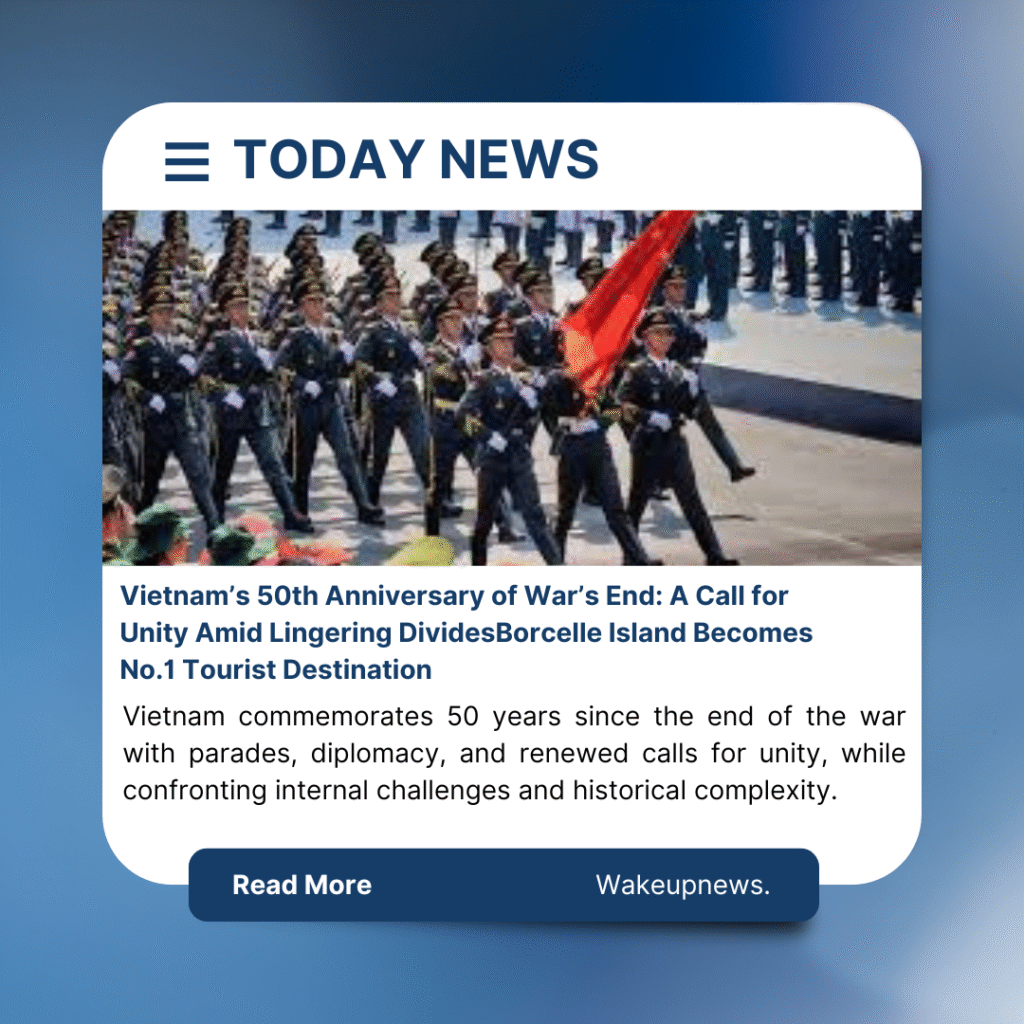
In 2025, Vietnam commemorated the 50th anniversary of the war’s end with large-scale events primarily in Ho Chi Minh City, not Hanoi as earlier misreported. Military parades, cultural performances, and exhibitions were held to reflect on the war’s impact and celebrate the country’s progress.
Notably, U.S. Consul General Susan Burns made a surprise appearance, symbolizing how far U.S.-Vietnam relations have come since the war.
Emphasis on National Unity and Healing
This year’s commemorations focused heavily on fostering national unity. Cultural performances included narratives from all parts of society, including ethnic minorities and former soldiers. Digital storytelling campaigns also encouraged young people to connect with older generations through interviews and family histories.
However, some observers noted the lack of recognition for the former South Vietnamese government, highlighting the ongoing tension in national memory.
Economic Transformation Since the War
Vietnam emerged from the war economically shattered, but it has since experienced a remarkable transformation. After decades of hardship, the country began to pivot economically with the Doi Moi reforms of 1986, transitioning toward a socialist-oriented market economy.
Doi Moi Reforms and Global Integration
These reforms liberalized trade, encouraged private enterprise, and attracted significant foreign investment. Vietnam’s economy has since boomed, with sectors such as electronics, textiles, and tourism driving growth.
However, this progress has not come without challenges. The World Bank’s 2025 growth forecast has been adjusted down to 5.8%, citing global uncertainty and supply chain risks. Additionally, Donald Trump’s proposed 46% tariffs on Vietnamese imports, if implemented, could pose serious threats to export-dependent industries.
Geopolitical Shifts and U.S.-Vietnam Relations
Vietnam’s reconciliation with the United States stands as one of the most powerful examples of post-war diplomacy. The U.S. is now among Vietnam’s largest trading partners, and strategic cooperation spans areas like security, climate resilience, and education.
Yet, beneath the economic partnership, contradictions remain. Ho Chi Minh City’s booming luxury retail sector and skyscrapers contrast sharply with the state’s continued Communist Party rhetoric, illustrating Vietnam’s balancing act between ideology and market pragmatism.
Public Reactions and Historical Sensitivities
The government’s emphasis on unity has drawn both praise and criticism. Veterans and activists, including U.S. figures like Dale Tippett, who was involved in the final evacuation of Americans from Saigon, and Roger McGill, known for his post-war reconciliation activism, have voiced mixed emotions.
While the events brought closure for some, others criticized the lack of space for dissenting perspectives, especially from former South Vietnamese soldiers and diaspora communities.
Role of Veterans and War Survivors in Commemoration
Veterans were central to the anniversary, receiving medals, care packages, and special recognition. Many participated in interviews that highlighted their sacrifices, both during and after the war. Healthcare and pension support for aging veterans was also emphasized.
Cultural Reflections on the War
Art, music, and literature remain vital to preserving war memory. Wartime poetry, modern memoirs, and films like When the Tenth Month Comes continue to educate and resonate with the public.
Tourism and Historical Sites Related to the War
Key historical landmarks such as the Cu Chi Tunnels, Reunification Palace, and the War Remnants Museum saw increased tourist activity during the commemoration period. These places serve both educational and economic purposes, attracting millions of international visitors each year.
Notably, tank number 390—the iconic vehicle that crashed through the Reunification Palace gate in 1975—was part of the official exhibit during the events.
The Role of Youth in National Memory and Future Vision
Young people actively participated in re-enactments, digital history campaigns, and even intergenerational interviews. Education reforms now encourage more balanced historical perspectives, allowing students to question, learn, and connect without glorifying conflict.
Environmental and Demographic Challenges
While celebrating its transformation, Vietnam also faces pressing challenges:
- Environmental degradation is a growing concern. Pollution in waterways like the Mekong Delta threatens biodiversity and livelihoods.
- The aging population poses significant economic and healthcare burdens, as Vietnam’s labor force begins to shrink.
These issues received limited coverage during official celebrations but remain urgent areas for national development.
Lessons Learned and the Path Ahead
Vietnam’s path from war to peace offers lessons in resilience and diplomacy. The leadership continues to champion values of cooperation, modernization, and sustainability.
Global Response and International Coverage
International media outlets generally commended Vietnam’s commemorations. Messages of congratulations poured in from leaders across Asia, Europe, and North America, praising the country’s progress and diplomatic maturity.
Government’s Vision for the Next 50 Years
Looking ahead, Vietnam aims to:
- Become a high-income economy by 2045
- Prioritize green technologies and clean energy
- Expand multilateral partnerships, especially within ASEAN and with the EU
- Address inequality and environmental degradation more holistically
❓ Frequently Asked Questions (FAQs)
Q1: Why is April 30 significant in Vietnam?
It marks the fall of Saigon in 1975 and the official end of the Vietnam War.
Q2: What are Doi Moi reforms?
Economic reforms launched in 1986 that shifted Vietnam toward a market-based economy.
Q3: How is the U.S. viewed in modern Vietnam?
It has transitioned from an enemy to one of Vietnam’s most important trade and strategic partners.
Q4: Are war veterans still honored in Vietnam?
Yes, through state-supported healthcare, commemorative events, and public tributes.
Q5: What role do young people play in commemorations?
They engage in storytelling projects, cultural re-enactments, and education reforms to preserve history.
Q6: What are the main challenges Vietnam faces today?
Key issues include environmental degradation, an aging population, and navigating global economic shifts like proposed tariffs.
🏁 Conclusion: Honoring the Past, Building the Future
Vietnam’s 50th anniversary of war’s end is not just a look backward—it’s a springboard for envisioning a hopeful, unified, and forward-thinking future. Despite lingering divisions and challenges, the country’s resilience, diplomatic efforts, and economic drive show that peace is not only possible, but sustainable.